Cork vs. Rubber Turntable Mats: Which Reduces Static Best?
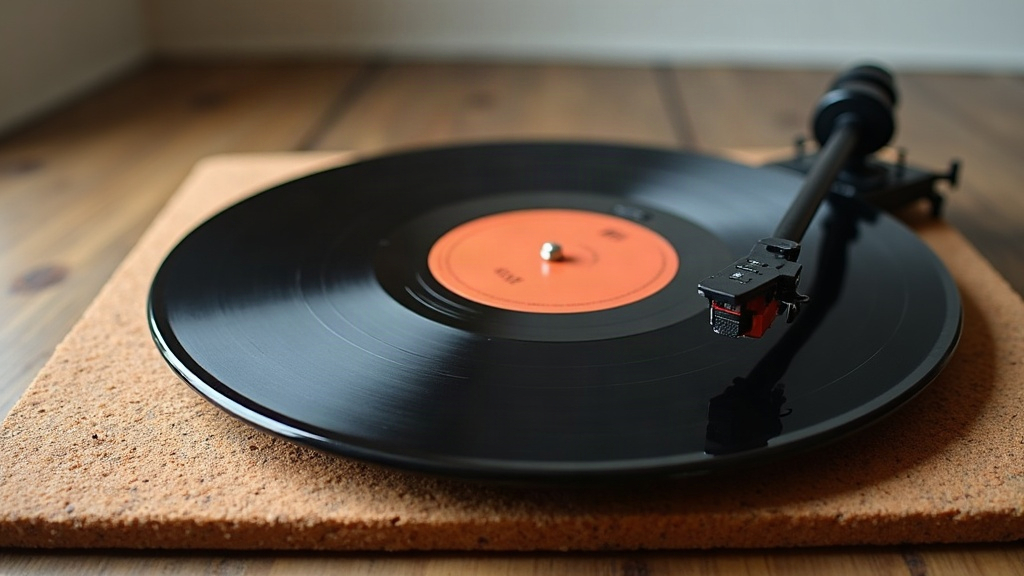
If you’ve ever lifted a record off the platter only to feel it cling to your palm, crackle faintly, or pull in a fine layer of dust like a magnet, you’ve met static electricity face to face. And your turntable mat has more to do with that annoyance than most people ever stop to consider. Between the two most common mat materials, cork generally beats rubber when it comes to static reduction, mostly because of its natural fiber structure and its lower tendency to build up triboelectric charge. That said, the story isn’t quite that simple. The “best” mat really depends on your specific turntable, the humidity level in your room, and honestly, the sound you’re chasing.
Why Turntable Mats Cause Static in the First Place
Static builds up through friction, specifically the microscopic rubbing that happens between the vinyl and the mat surface as the platter spins, and every time you set down or lift a record. This is the triboelectric effect. Different materials sit at different points on what’s called the triboelectric scale, and the bigger the “charge gap” between two materials, the more static gets generated when they touch and separate.
- Rubber is synthetic and non-porous, and it tends to hold and generate charge fairly easily, especially when the air is dry.
- Cork is natural, porous, and cellular in structure. It dissipates charge much more efficiently and doesn’t build friction charge nearly as aggressively as rubber does.
- Felt, a popular third option because it’s light and cheap, is actually one of the worst offenders for static, which surprises a lot of people who assume it’s the gentler choice.
Cork Mats: The Static-Reduction Winner
Cork’s honeycomb-like cellular structure naturally resists building up static charge. It’s also slightly absorbent, which helps maintain a thin moisture layer between the record and the mat, and that moisture is exactly what helps charge dissipate instead of accumulate.
Pros of cork mats:
- Noticeably less static cling and crackle when you lift a record off
- A subtle sonic warmth, many listeners describe it as a slight softening of harsh high frequencies
- Solid grip without feeling tacky or sticky
- Naturally sourced, and often a greener option overall
Cons of cork mats:
- Over time it can compress and lose a bit of thickness
- Sound is slightly less “reference neutral” than a bare platter or rubber mat
- Cheaper cork mats are often thin, with inconsistent density from one unit to the next
Rubber Mats: Great Grip, More Static Risk
Rubber is the factory-default mat on plenty of turntables, including classic Technics decks, and for good reason. It’s durable, cheap to manufacture, and grips the record firmly enough to prevent slippage during scratching or heavier tonearm tracking.
Pros of rubber mats:
- Excellent grip and solid vibration damping
- Extremely durable, it won’t compress or wear out quickly
- Frequently the go-to choice for DJ setups and direct-drive turntables
Cons of rubber mats:
- More prone to static buildup, particularly in dry, low-humidity rooms
- Can dull high-end detail slightly on certain systems
- More static means more dust clinging to the record surface, and that dust speeds up groove wear over time
What the Real-World Testing Shows
Run a side-by-side test with an anti-static meter (or even just a simple static-sensitive dust check), and cork mats consistently come out with lower residual charge after you remove a record than rubber mats do. In a dry winter room, that gap can be pretty dramatic. Rubber, on the other hand, starts closing the gap once humidity climbs above roughly 50% relative humidity, since moisture in the air bleeds off static charge no matter what material you’re using.
So really, your climate matters just as much as your mat choice:
- Dry climates or winter heating season: cork has a clear, measurable edge.
- Humid or coastal climates: the gap between cork and rubber shrinks a lot, sometimes to the point of barely mattering.
Beyond the Mat: Other Static-Fighting Tips
No mat, however good, eliminates static entirely on its own. Pair whichever one you choose with:
- A carbon fiber anti-static brush, used before and after every play
- A room humidifier kept around 45-55% relative humidity
- An anti-static record sleeve for storage between listening sessions
- Proper grounding of your turntable, which cuts down on both hum and charge buildup
Which Mat Should You Buy?
- Go with cork if crackle, dust, and record cling are your main headaches, especially if you live somewhere dry for much of the year.
- Go with rubber if grip and long-term durability matter more to you, if you DJ regularly, or if you’ve already got humidity under control in your listening space.
- Consider a hybrid cork-rubber mat. A few manufacturers now build these specifically to blend cork’s static resistance with rubber’s grip and damping, giving you a bit of both worlds.
Conclusion
For static reduction specifically, cork wins over rubber, thanks to its porous, natural structure that resists triboelectric buildup. Rubber still holds its ground on grip and durability, and in humid rooms the static difference barely matters anyway. If you’re a home listener tired of crackly, dust-covered records, switching to a good cork mat, combined with a humidity-controlled room and a decent anti-static brush, is probably the single easiest upgrade you can make for cleaner, quieter listening.