Acrylic vs Glass Turntable Platters: Best for Resonance?
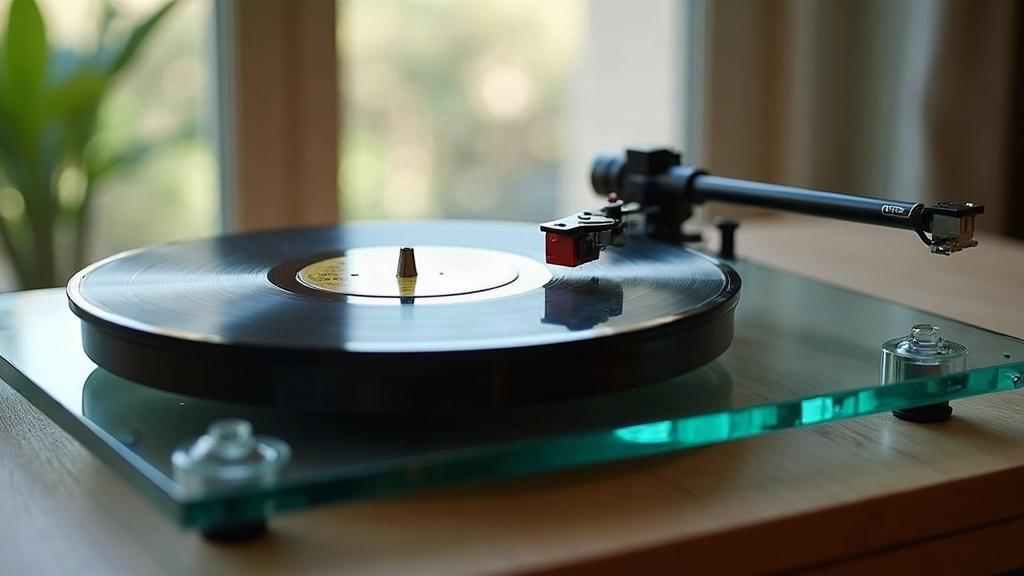
If you’re torn between acrylic and glass turntable platters, here’s the short version: acrylic generally does a better job soaking up motor resonance and structural vibration, while glass wins on speed stability and gives you a brighter, more detailed top end, mostly because it’s denser and heavier. Neither one is the automatic winner here. What works depends on your drive system, how well your plinth isolates vibration, and which cartridge you’re running.
Why Platter Material Matters for Resonance
A platter has two jobs, and it has to do them simultaneously: spin at a dead-steady speed, and keep unwanted vibration away from the stylus-record interface. Motor noise, bearing chatter, even vibration traveling through the floor or air, can all sneak into the platter and color what you hear. How dense the material is, how well it damps internally, and how it couples with the record sitting on top of it, all of that determines how much junk actually reaches your cartridge.
Acrylic Platters
Cast acrylic (not the extruded stuff) has turned into the default upgrade path for mid-range and high-end decks. Pro-Ject, Rega (as an option), and VPI all sell acrylic platter upgrades, and there’s a reason for that.
Strengths:
- High internal damping. Acrylic absorbs vibrational energy instead of bouncing it back, so you get less of that resonant “ringing” effect.
- Better impedance match with vinyl. Acrylic’s acoustic impedance sits closer to the record material itself, so energy transfers more cleanly at the record/platter boundary instead of reflecting back up into the stylus.
- Lighter than glass at the same thickness. That means less load on a belt-drive motor, and the platter settles back to speed faster after you nudge the record by hand.
- Often no mat required. A lot of people just drop the record straight onto bare acrylic.
Weaknesses:
- Less mass means less flywheel effect, so on cheaper motors and bearings, speed can wobble a touch more under stylus drag.
- Static buildup is a real nuisance. It pulls dust right onto the surface.
Glass Platters
Glass is denser and stiffer. You’ll see it on older Technics models and a handful of other direct-drive decks.
Strengths:
- More mass, better flywheel effect. Rotational speed stays steadier (lower wow and flutter), even when stylus drag fluctuates.
- Very rigid. Some listeners swear it gives a more “transparent,” more detailed treble.
- Non-porous, so cleanup is a breeze.
Weaknesses:
- Poor internal damping. Glass rings and reflects vibration rather than absorbing it, which can push the sound toward harder or brighter, especially paired with an already-bright cartridge (certain Ortofon or Audio-Technica models come to mind).
- A heavier platter puts more strain on a belt-drive motor, and if that motor isn’t well isolated, you might actually hear more of its noise.
- Doesn’t couple with vinyl’s acoustic impedance nearly as well as acrylic does.
Which Should You Choose?
Go acrylic if:
- Your turntable is belt-driven with a modest motor (true of most decks under $1,500).
- You’re after a warmer, smoother sound with less surface noise.
- You’re upgrading an older Rega, Pro-Ject, or similar unit.
Go glass if:
- You’re running a direct-drive deck with a strong, well-isolated motor (think Technics SL-1200 series).
- Speed stability is non-negotiable, say, you’re DJing or doing critical listening on orchestral recordings.
- You’re pairing it with a warmer cartridge to balance out glass’s tendency toward brightness.
A Practical Middle Ground
Plenty of audiophiles just tackle resonance head-on, no matter what the platter’s made of, by adding:
- A felt, cork, or leather mat to decouple the record from the platter surface.
- Isolation feet under the turntable to cut down on motor and room vibration making it into the system.
- A record clamp or weight, which adds effective mass and tightens the coupling. This helps a lot with lighter acrylic platters in particular.
Conclusion
When it comes to killing motor resonance, acrylic takes it, thanks to its damping and its near-match with vinyl’s own acoustic impedance. Glass takes the speed-stability crown, simply because mass helps there. If your turntable already runs a strong, isolated motor with tight speed control, glass’s downsides barely matter. But if you’ve got a budget belt-drive deck that’s prone to motor noise, swapping in an acrylic platter is one of the cheapest, most effective sonic upgrades you can make.