Removing Stubborn Water Damage Stains from Vintage Vinyl Sleeves
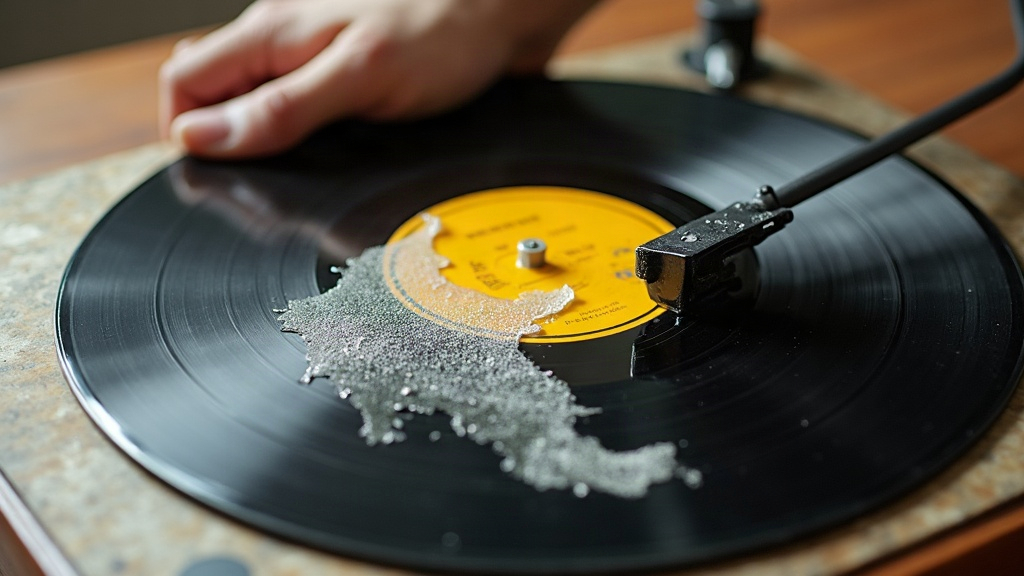
Finding a water ring stamped across a Blue Note original, or worse, a fuzzy patch of mold creeping up the corner of a sleeve you’ve hunted for years, is the kind of thing that makes a collector’s stomach drop. The good news: most of that damage is treatable, provided you slow down and treat the cardboard like the fragile, decades-old paper product it actually is. Vintage jackets weren’t built to survive spills or basement humidity. They’re porous, thin, and printed with ink that lifts if you so much as look at it wrong with a wet rag. Scrub too hard or reach for a household cleaner and you’ll trade a fixable stain for permanent, irreversible damage. The approach that actually works starts dry, stays minimal on moisture, and only escalates when it has to.
Assessing the Damage: Stains vs. Mold
Before you touch anything, figure out what you’re actually dealing with. Water damage on album covers usually shows up one of two ways.
- Tidal Marks (Water Rings): The brownish, crusty rings you see around the edge of a former puddle. These form because the sizing (a glue-like coating in the paper) and embedded dirt travel outward as the water evaporates, concentrating at the boundary. Classic ring-around-the-collar, but on cardboard.
- Mildew and Mold: Leave a sleeve damp for even a few days in a humid closet and you can end up with black, green, or powdery white spotting. This isn’t cosmetic the way a water ring is. Mold means live spores, and treating it wrong (or not at all) risks spreading the problem to every record next to it on the shelf.
Essential Restoration Tools
Before you start, gather these. Skipping the “archival-safe” part is how good intentions turn into ruined artwork:
- Absorbent microfiber cloths (clean and completely dry)
- Kneaded artist eraser or a plain gum eraser
- Cotton swabs (Q-tips work fine)
- Distilled water (tap water carries minerals that leave their own stains behind, which defeats the whole point)
- 3% Hydrogen Peroxide or 70% Isopropyl Alcohol (mold treatment only, not for general cleaning)
- Silica gel packets
Step-by-Step Guide to Removing the Stains
Step 1: Get the Sleeve Completely Dry First
Don’t clean anything while it’s still damp, that’s rule number one. If the water exposure just happened, pull the vinyl out of the jacket right away so moisture doesn’t transfer to the record. Set the empty sleeve in a well-ventilated room with a few silica gel packets tucked inside, and just wait. Skip the hair dryer, skip setting it near a radiator. Direct heat warps cardboard almost instantly, and once it buckles, it stays that way.
Step 2: Dry Cleaning First, Always
Start with zero liquid. Take a kneaded artist eraser and roll it, gently, over the brown tidal lines.
- Don’t scrub back and forth. That motion pulls the printed ink right off with the dirt.
- A soft dabbing or rolling action is enough. The eraser’s tacky surface grabs surface grime and visibly softens the harsh edge of the stain, often more than people expect from “just an eraser.”
Step 3: Small, Controlled Moisture
If dry cleaning gets you partway but the ring is still visible, you can bring in a tiny bit of water, emphasis on tiny.
- Dampen a cotton swab with distilled water. Barely damp. If you can see water beading on it, it’s too wet.
- Roll it gently over the darkest section of the ring.
- Follow immediately with a dry microfiber cloth and press down firmly to blot, not wipe, the moisture back out.
- Work in roughly one-inch sections. Cardboard saturates faster than you’d think, and a soggy patch undoes everything you just did.
Step 4: Dealing With Mold
Water won’t touch mold, so don’t waste time trying. Dip a cotton swab in 3% hydrogen peroxide or 70% isopropyl alcohol, squeeze out anything that isn’t clinging to the fibers, and dab (don’t rub) the affected spots. The alcohol kills active spores on contact and evaporates fast enough that it won’t soak into the board. One thing worth doing every time: test in a hidden corner first, like the bottom edge of the spine, since some vintage inks from the 60s and 70s will lift or smear with solvent exposure.
What to Avoid During Restoration
Panic makes people do dumb things to rare records. A few to rule out entirely:
- Bleach: Strips color instantly and breaks down the paper fibers underneath. There’s no coming back from this one.
- Paper Towels: Fine for your kitchen counter, terrible on the glossy laminate finish common on jackets from the 60s and 70s. The texture scratches it.
- Ironing: You’ll see this suggested for flattening warped covers, but the heat melts the original glue holding the seams together. You’d be trading a warp for a falling-apart jacket.
Protecting Your Collection Moving Forward
Once the stain is as faded as it’s going to get and the sleeve is fully dry and clean, slide the jacket into an archival-grade HDPE or Mylar outer sleeve. The vinyl itself belongs in a fresh, anti-static inner sleeve, not the paper one that may still carry residual moisture or mold spores. Then store everything upright, in a climate-controlled space. Basements, attics, and any wall that backs onto the outdoors are exactly where condensation problems start again.
Conclusion
A jacket that’s been thoroughly soaked probably isn’t coming back to mint condition, and that’s just the reality of paper and water. But for the more common cases, faint rings, a corner of mildew, light discoloration, a careful approach gets you most of the way there. Start dry. Use water like it’s rationed. And remember the structural integrity of the cardboard matters more than chasing a perfect finish. A faded water mark, treated and stable, is just part of a record’s history at that point. A jacket destroyed by an overzealous cleaning attempt is gone for good.